VILLA BOREAL · BERGLYK 8 · BOCKHOLM · FLENSBURGER FÖRDE
Local Cuisine –
What People Eat Here
Schnüüsch from Angeln, Labskaus from seafarers, Matjes from Glückstadt, kale after the first frost – and on the other side of the fjord: Smørrebrød, Flæskesteg and Rødgrød med fløde. Two cuisines, one region, boundless flavour.
Angeln cuisine · Schleswig-Holstein cuisine · North Frisian cuisine · Danish cuisine · As of 2025/2026
"Broken sööt – broken sweetness: the principle of this cuisine is to offset sweet with sour, salty or bitter. A philosophy understood only here, as long as you live by the water."
This region has two cuisines in one. On the German side, the Angeln and Schleswig-Holstein cuisine – rustic, honest, shaped by the sea and the principle of broken sweetness (Broken sööt). On the Danish side, the Smørrebrød universe, caramelised potatoes and Rødgrød med fløde. Together they form a culinary landscape that is truly unique.
Fish & Seafood
Fresh from the cutter, smoked, cured or raw – the fjord is the menu
Fresh cutter fish – plaice, cod, flounder
From cutter to tableOn the outer Angeln fjord coast, genuine cutter fish is still available – straight from the boat. Christopher Lehuniak (cutter LAN 23) and Harald Lehuniak (cutter Odin LAN 3 FF) dock in Langballigau harbour. Plaice, flounder, cod and herring depending on season. Fish doesn't get fresher.
Matjes – Young herring in June
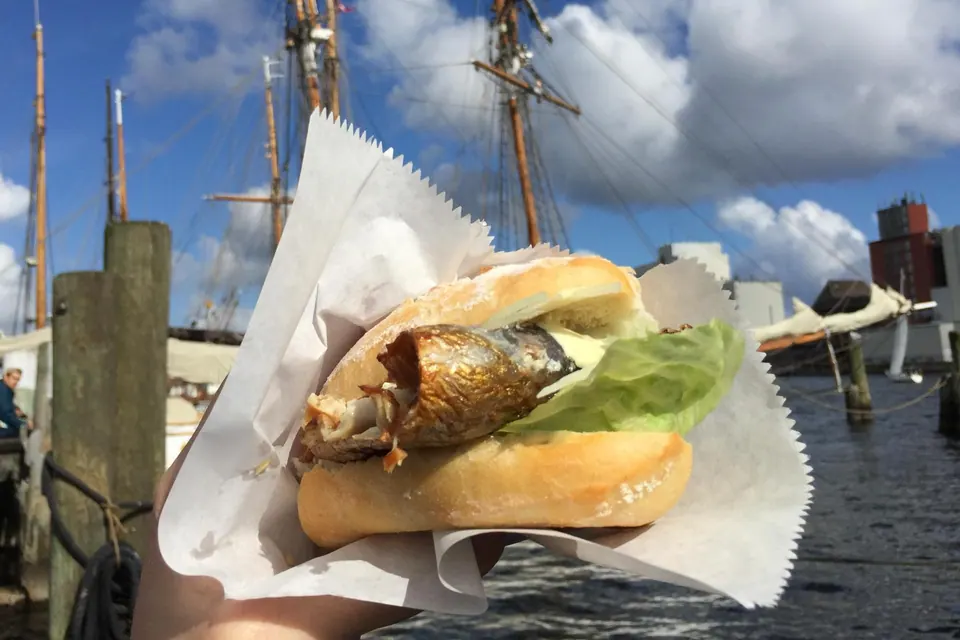
Mild salt-herring classicMatjes is not ordinary herring – it's a young herring that ripens through enzymes in brine without ever being heated. Butter-soft, mild, slightly sweet. Classically served with jacket potatoes and green beans with bacon.
Labskaus – The sailor's dish
Everything puréed – so toothless sailors could eat it tooLabskaus is the most honest of all northern German stories: on long voyages, sailors lost their teeth to scurvy. What remained – corned beef, potatoes, onions, matjes, beetroot – was puréed and served with fried egg and gherkin.
Smoked fish – eel, plaice, salmon
The scent of the NorthSmoked eel, plaice and salmon are the coast's delicacies. Eel from the fjord and the Schlei is considered one of the fattiest and most aromatic anywhere.
Pannfisch – Pan-fried fish with fried potatoes
'Whatever the pan has to offer'Pannfisch is northern Germany's leftover dish at its best: pieces of fish pan-fried, served with fried potatoes and mustard sauce. Simple, filling, honest.
Torsk med sennepssovs – Cod with mustard sauce
The quintessential Danish winter dishIn Denmark, cod (torsk) with mustard sauce and boiled potatoes is a winter classic. Gently cooked, lightly salted, the mustard sauce mild and aromatic.
Fiskefrikadeller – Danish fish patties
Frikadeller, but from the seaDanish fish patties made from white fish, mixed with onions, eggs and spices, fried golden brown. Served with remoulade and cucumber salad.
Indlagte sild / Pickled herring
Pickled in brine – preservation as pleasurePickled herring is one of the oldest foods of the North Sea and Baltic coasts. Preserved in a vinegar-spice brine with onions, bay leaf and mustard seeds.
Meat, Sausage & Hearty Classics
From smoked ham to pork belly – the savoury side of fjord cuisine
Kale with Kasseler, sausage & pork cheek
'Only harvest after the first frost!'The kale evening is a northern German institution. Accompanied by: Kasseler, boiled sausage, pork cheek, mustard and fried potatoes.
Holsteiner Katenschinken
Smoked in the little cottageHolstein's Katenschinken is smoked in the Kate (small smokehouse) over a slowly smouldering fire – deeply aromatic, slightly sweet, with a pronounced smoky note.
Holsteiner Sauerfleisch
Cured meat in vinegar brine – preservation as delicacyCured pork preserved in a vinegar-spice brine and sliced cold. Served with remoulade, mustard and farmhouse bread.
Stegt flæsk med persillesovs
Crispy fried pork belly with parsley sauceVoted Denmark's national dish by popular vote in 2014. Crispy fried pork belly, parsley sauce and potatoes.
Frikadeller – Danish meatballs
Frikadeller – not to be confused with German FrikadellenDanish meatballs made from pork and veal, with flour, milk, egg, onions and nutmeg. Pan-fried, slightly flat. Served with red cabbage, beetroot, cucumber salad and potatoes.
Flæskesteg – Roast pork with crackling
Flæskesteg = roasted pork, rind becomes crispyDanish Christmas roast pork with crispy roasted rind. Accompanied by Rødkål (sweet-sour red cabbage) and Brunede kartofler (caramelised potatoes).
Røde pølser – The Danish hot dog
Røde pølser = red sausages; pølsevogn = sausage cartOn every Danish street corner for over 100 years. The bright red sausages in a roll, with sweet remoulade, crispy onions and sweet-sour pickle slices.
Vegetables, Soups & Stews
Schnüüsch from Angeln, buttermilk soup in summer, elderberry in autumn
Schnüüsch – The national dish of Angeln
Schnüüsch (in Danish: Snysk) – milk-vegetable stew from AngelnSchnüüsch comes from this very region – from Angeln. A vegetable soup made from the first young seasonal vegetables: beans, peas, kohlrabi, carrots – all cooked together in fresh milk. Traditionally served with Holstein smoked ham.
Pears, beans and bacon
The quintessential Broken sööt dishPears, beans and bacon is one of the most famous dishes of Schleswig-Holstein cuisine – and the perfect example of Broken sööt: sweet pears meet salty bacon.
Buttermilk soup with Klüten
Cold, sour, refreshing – summer dish par excellenceButtermilk, milk, salt, lemon zest – a cold soup for hot days. The Klüten are small semolina dumplings cooked in the soup.
Elderberry soup
Sweet-sour, with semolina dumplings or sagoA sweet-sour soup made from ripe elderberries – served warm as a starter or cold as dessert. Elderberries grow wild everywhere along the fjord.
Holstein turnip mash
Mashed swede – honest farmhouse cookingMashed swede with butter and bacon – plain and nourishing. Today it's experiencing a renaissance in slow-food restaurants.
Sønderjysk grønlangkål – South Jutland kale
Completely different from northern German kaleSouth Jutland kale is finely chopped, cooked in butter, finished with cream or buttermilk – sweeter, creamier than the hearty northern German kale.
Desserts, Sweets & Pastries
Rote Grütze, Mehlbüdel, Rumtopf and Danish puff pastry
Rote Grütze with cream
In Danish: Rødgrød med fløde – the infamous pronunciation testRed berries – strawberries, raspberries, redcurrants, blackberries – thickened with starch into a creamy compote, poured over with liquid cream. A summer classic on both sides of the fjord.
Mehlbüdel – The northern German dumpling
Mehlbüdel = flour bag; Groten Hans = larger versionAn egg-lightened flour dumpling cooked in a water bath. Eaten sweet-salty – the typical Broken sööt: with cherry compote and bacon.
Rumtopf – The Flensburg preserving jar
Fruit compote in Flensburg rum – summer in a jarFresh seasonal fruit is layered with sugar and Flensburg rum in a ceramic pot – strawberries in June, cherries in July, peaches in August, plums in September.
Frisian bean soup with vanilla ice cream
Yes, this is a sweet dessert soup – and it's goodWarm, thick bean soup with sugar and spices, served with a scoop of vanilla ice cream. Broken sööt in its purest form.
Förtchen / Futtjes
Danish: Æbleskiver – spherical pancakesYeast-dough balls baked in a special cast-iron pan. Hot from the pan with icing sugar and jam.
Migge's Danish Bakery – A piece of Denmark in Flensburg
Norderstraße 9, 24939 Flensburg · ~19 km · ~20 minThe only dedicated Danish bakery in Flensburg. Copenhagen-style Birkes, Cremeboller, Kanelsnegl, Spandauer, vanilla cream slices, rum balls and artisan breads.
Wienerbrød – Danish puff pastry
Danish: Wienerbrød ('Vienna bread') – 27 layers of butter27 layers of butter, filled with cream, marzipan or jam. Kanelsnegl, Spandauer, direct puff pastry. Freshly baked daily in every Danish bakery.
Risalamande – Rice pudding with the hidden almond
Ris à l'amande – Danish Christmas traditionCold rice pudding with chopped almonds and whipped cream, served with warm cherry sauce. Hidden in the pot is a whole almond – whoever finds it gets a present.
Koldskål med kammerjunkere – Cold buttermilk soup
The Danish summer dish in bowlsCold buttermilk soup with egg, lemon zest and vanilla – sweet, refreshing, light. Accompanied by kammerjunkere: small crispy butter biscuits.
Danish Highlights – The Other Shore
Smørrebrød, Smørrebrød and more Smørrebrød – plus everything around it
Smørrebrød – The artful open sandwich
Smørrebrød = buttered bread, but that's a massive understatementSmørrebrød is not a sandwich – it's a composition art. The base: a slice of dense rye bread, generously spread with salted butter. Rule: fish always on white bread, meat always on rye.
Brunede kartofler – Caramelised potatoes
Bathed in sugar and butter – the Danish way to love potatoesSmall round potatoes are caramelised in a sugar-butter mixture over high heat. Sweet, nutty, irresistible.
Danish soft ice with liquorice sprinkles
Dansk soft-ice – with Danish liquorice as sprinkle sugarDanish soft ice is creamier, denser, sweeter – plus the liquorice sprinklers that go on virtually every soft ice in Denmark.
Drinks – From Pharisäer to Lütt un Lütt
Rum in coffee, aquavit with fish, grog in a storm – the fjord's drinking culture
Pharisäer – Rum in coffee the pastor didn't notice
Coffee + dark rum + sugar cube + whipped cream (never stir!)On Nordstrand, a farmer christened his child and served guests secretly fortified coffee. The pastor discovered it and cried: You Pharisees! – the name stuck. Never stir – drink through the cream.
Angler Muck
Punch-style drink from the Angeln regionThe local drink of the Angeln population – a punch-style hot drink made from rum or grain spirit with water.
Lütt un Lütt – Small and Small
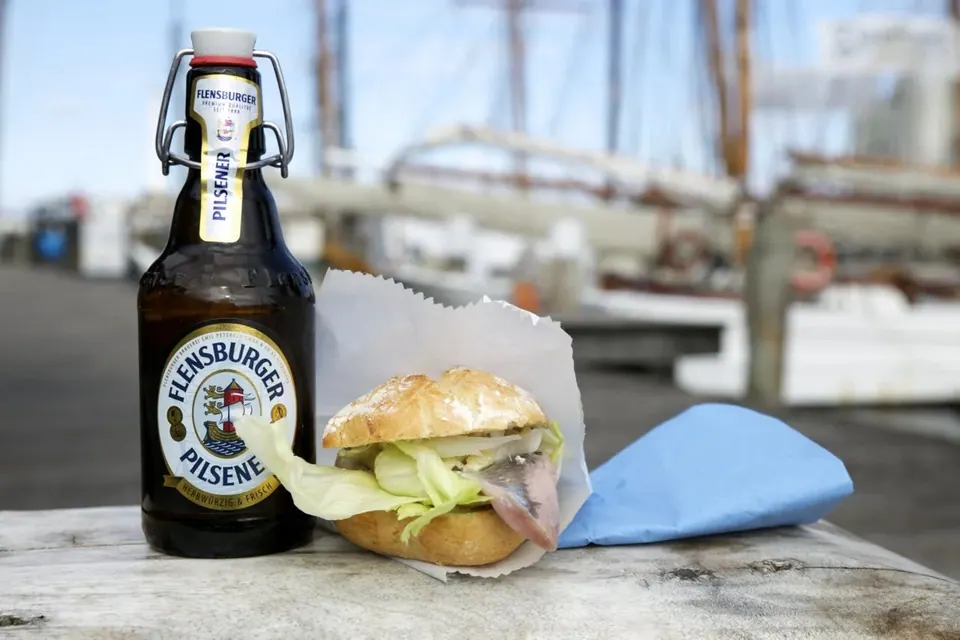
A small beer + a small schnapps = northern German philosophy of lifeA small beer – preferably Flens – and a Köm or corn schnapps on the side, drunk after a day's work. A living ritual in Flensburg and Angeln.
Flensburger Grog
Rum mutt, Zucker kann, Water bruukt nich.Rum, sugar, hot water. The Flensburg maxim: rum is a must, sugar is optional, water is unnecessary.
Köm – The regional aquavit
Pale yellow, 32–35%, caraway-flavouredPale yellow aquavit with typical caraway aroma. Usually drunk cold, as an accompaniment to beer or fish.
Akvavit – The Danish aquavit
Snaps – drunk cold, not slowlyIn Denmark it's called Akvavit or simply Snaps – drunk cold and promptly, with fish dishes, with Smørrebrød, at every feast. Skål!
Gløgg – Scandinavian mulled wine
Danish/Swedish, with spices, almonds and raisinsGløgg is the Scandinavian mulled wine – more intense, sweeter, with cardamom, cinnamon, cloves, ginger. Served with almonds and raisins.
Bommerlunder – The ice-cold caraway schnapps
Eisgekühlter Bommerlunder... – Die Toten Hosen, 1983Produced in Flensburg until 2000. In 1983 Die Toten Hosen wrote a drinking song about it. The slogan: The great clear spirit from the North.
Fjordwein – Nordic wine from Dollerup
Wine from the Flensburg Fjord – unthinkable 20 years agoOn the Jensen family farm in Dollerup – family-owned since 1927 and now in its fourth generation – vines have been growing for a few years. Carolin and Hanke Jensen turned around three hectares of arable land into two vineyards and grow fungus-resistant PIWI varieties to organic criteria. The grapes are picked by hand and vinified in the farm's own cellar. The wines are called Favorit, Duett, Kompliment, Applaus, Frohsinn, Polar, Solstice and Jubel – lean, fresh, with clear acidity.
The Principle: Broken sööt – Broken Sweetness
Schleswig-Holstein cuisine has a secret: Broken sööt – broken sweetness. Always serve sweet with a counterpoint: fruit sauce with salt meat, compote with fried fish, prunes with roast goose. The culinary balance principle of this region.
Renaissance: How the North German classics are coming back
For a long time Labskaus, Pannfisch, mashed turnips and kale were dismissed as old-fashioned home cooking – today they are enjoying a remarkable revival. A new generation of chefs is rediscovering the regional classics, cooking them from seasonal, often organically certified ingredients and reinterpreting them with respect for the original. The movement is driven by the Slow Food idea, by short supply chains and by pride in the region's own culinary heritage. What was once the leftover cuisine of poor sailors and farmers – pureed Labskaus, Pannfisch from the leftovers pan, mashed turnips – now sits confidently on the menus again. Chefs like Benjamin Spack (Smager on the Schlei) focus on game and organic produce, Piet Krohn (Piet am Fischmarkt in Flensburg) turns smoked eel and Labskaus into a delicacy, and at the Roter Haubarg near Witzwort, Galloway beef and salt-marsh lamb come straight from the neighbourhood.
🗓 What's in Season When
A cuisine understood only here versteht.
Schnüüsch from the garden next door, matjes in June, grog in a storm and Rødgrød med fløde on the other side of the fjord – that's the taste of this trip.
CHECK AVAILABILITYMORE FROM THIS CATEGORY
Similar guides
RELATED JOURNAL STORIES
Further reading
YOUR HOME BY THE SEA
Check availability